
In a fundraising chat someone asked for suggestions and advice about hosting a meeting for potential donors. A number of people commented: “Make sure to collect everyone’s email address.”
This sounds like smart advice. The fundraiser will want to follow up with attendees and email is a great way to do that.
But I went a little further. I messaged the person who posted and asked them: Collecting emails is a good idea. But why? What will you be doing with those email addresses?
And here’s where things get sticky.
Too many organizations try to collect as much personal information as possible so it can be added to their donor database. But too often that information is collected for the sake of collecting, not for actual use.
And that can create friction with people.
Consider your online donation form. When I perform a donation form analysis, one of the 50+ items I’m looking at is how many fields the form contains.
The more fields = more friction added to the process = fewer people submitting the form = fewer donations.
For example, you can get rid of the Mr./Mrs./Ms. dropdown box. And phone number should not be required- tell me why you need it and I’ll decide whether to give it to you or not.
When you ask people for more and more personal details, they start to wonder what you’re doing with all that data. The last thing you want is for people to become suspicious and not trust you to both safeguard and use their data responsibly.
Should your database include a summary or notes of each visit to donor X? Yes.
Do you need the maiden name of their mother in law? No (unless they bring her into the conversation for concrete purposes).
Do you need the last name of someone signing up to your enews? Nope.
Do you need their Zoom ID or blood type?
My point is that your organization has to consider what it asks for and what you have to have versus what would be nice to know.
Which leads me back to email.
Why you need their email address
I messaged the fundraiser who was hosting the event. She told me she was collecting email addresses so they have them on record.
I pushed back: But what will you do with them? Send them your enews? Start sharing content about your work, impact, stories, data and more? Or will the only time they hear from you be when you have a financial ask?
It’s not a given that people willingly give away their email address. Everyone’s inbox is overflowing. You need to give them a REASON to hand over something as private as their email address.
(Interesting read: Here’s how to avoid inbox burnout from the constant stream of emails)
And this is where we sometimes fall short. People know you want their email address so you can send them asks during the year. But they also wanna know:
What value are you adding to my inbox? Why should I give you a space in my overflowing inbox? Tell me what I get and then let me decide yay or nay.
Lemme show you something:
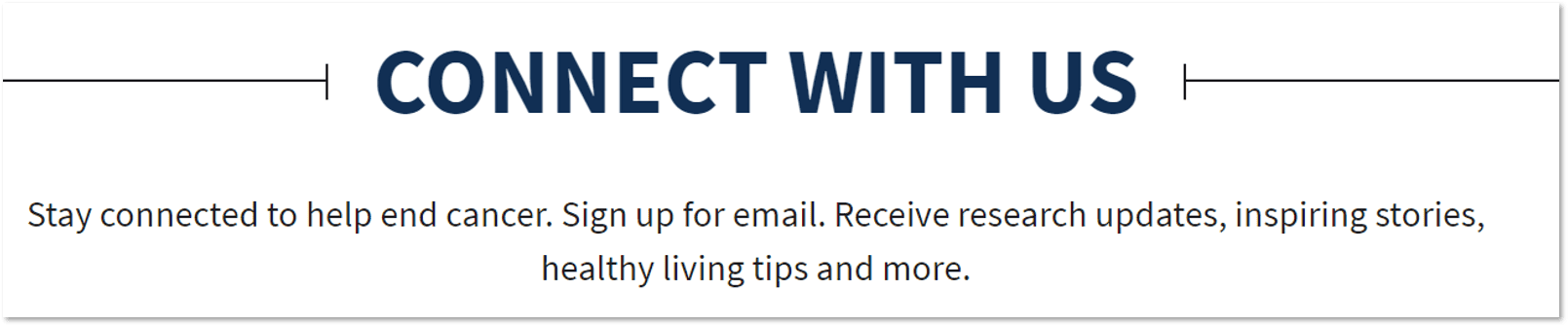
That used to be the CTA the American Cancer Society used on its website to encourage enewsletter signups. Look at the value they offer:
- We all know someone who has cancer, had cancer and died or survived cancer. We all wanna end cancer. If staying connected will help, I’m onboard.
- I wanna know how close we are to defeating cancer. Research updates? Yes please!
- I wanna avoid cancer. Healthy living tips to help me hopefully avoid a cancer diagnosis? That’s value in my inbox. Sign me up!
(Interesting read: This is my alltime favorite blog post that I wrote. It includes a look at the Fuck Cancer organization and hashtag. Read and enjoy a good laugh!)
Yes it’s a good idea to collect email addresses of attendees at an event. But if you have no email strategy or plan on how to effectively use email to grow and thrive, then you’re just collecting email addresses for the sake of being able to tell the Board that your email list grew by X percent in the last year.
Quality of email list > quantity of email addresses every day.
It’s not the size of the list. It’s how you use it.
Keep that in mind next time you’re collecting email addresses. Have a plan for how to use email to build relationships and connections with subscribers, not just as a vehicle for soliciting donations.


