A few truths at the outset:
1️⃣ The average donor is 60+ years old The average fundraiser is below 40.
This means there’s great potential for a communication gap between the generations. This is why it’s MISSION CRITICAL for constant and consistent communications with your donors! Learn how they want to be communicated with, what interests them and more. Survey, meet, phone, whatever it takes.
2️⃣ The drive to find large donations has completely overshadowed the need to be seeking small donations and especially monthly gifts.
It’s one of the main reasons I believe retention sucks and individual household giving is down. Too many nonprofits are neglecting people who give a “small” amount annually or $10 monthly. It makes no sense to me but this is what I’m seeing and hearing.
3️⃣ Fact is the majority of wealth right now lies with Boomers and some Gen Xers. Maybe even some older Millennials. Of course, trillions of dollars will be passed down to younger generations as Boomers begin dying out.
Which leads me into today’s discussion about direct mail.
Yes, direct mail is still king. It has the biggest ROI and can do wonders for surpassing your fundraising goals.
But when I work with organizations on their fundraising campaigns, I will hear the following: “Let’s segment our list by age where we can. Send direct mail to Boomers and Gen Xers and email and texts to Millennials and Gen Z.”
The assumption is that older people will read your mail but younger people just throw all envelopes into the garbage can.
But is that true?
A recent study found that:
- 82% of donors said they respond to direct mail, including 93% of Gen Z donors
- 80% of Gen Z donors want to receive direct mail on a monthly basis (64% of Millennials said the same)
A study from a few years ago found that when asked “which is more effective at getting you to take action,” 30% of Millennials said direct mail vs. 24% who said email. From that same study: 90% of Millennials believe that direct mail is more reliable than email.
Maybe throw your assumptions about younger donors and direct mail out the window. It’s time to meet your younger givers where they actually are.
Send them mail!!!
What does the above mean for your organization?
When it comes to segmenting, don’t segment out younger donors from your direct mail send… unless they specifically requested to be contacted only via another channel.
The advantages of direct mail over other forms of comms and why younger people would read your letter…
- Different: It’s not a message/post they see on their phones. It demands their attention.
- Tangible: A letter is something they can hold in their hands. That’s a different experience than liking an Instagram post.
- Less crowded: Think of all the emails, texts, DM’s, social media posts a person could see in a day. This means their mailboxes are less crowded… which means more chance of getting seen, opened and read.
But sending a direct mail piece doesn’t mean you should separate print from digital. Just the opposite! The above study mentions that nearly 50% of all donors respond to a fundraising ask by visiting the organization’s website and donating online. Only 20% will mail in a check.
Here is how your fundraising direct mail piece can stand out and mobilize more young people to donate.
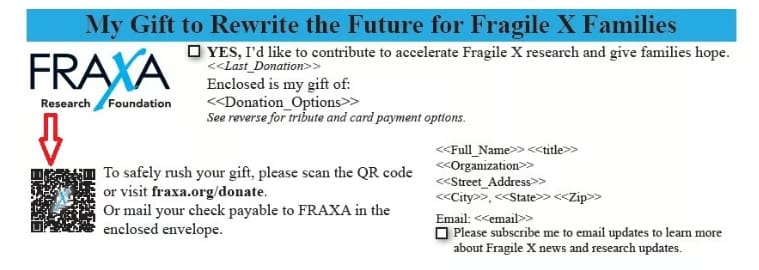
QR code: They can scan a QR code with their phone, go directly to your online donation form and donate. Here’s an example of what that looks like from FRAXA Research Foundation (who I previously worked with on their year-end campaign):

Monthly giving ask: I managed the end of year campaign for a national organization for many years. (Annual ROI? Averaged over 350%!) Here’s what they added as a tear off at the bottom of their direct mail ask:

The goal was to encourage more people- especially younger people- to become monthly givers.
Impact and stewardship: Make sure to use direct mail to share the impact of past gifts and steward all donors, no matter gift size! So yes, I’m emphasizing the gifts of younger people.
If they feel loved and know more about the cause, see who’s benefitting and how they’re making the world a better place, chances go up that your next direct mail piece ask will be answered positively.
In conclusion, make sure younger donors and prospects are also receiving your direct mail pieces. It will help boost your fundraising efforts!